The Picture Book Buyer Matrix: Who Buys, Who Influences, and Why It Matters
If you’re an author or indie publisher, understanding your end reader is very important. But understanding the buyer, typically a different person or entity, is critical.
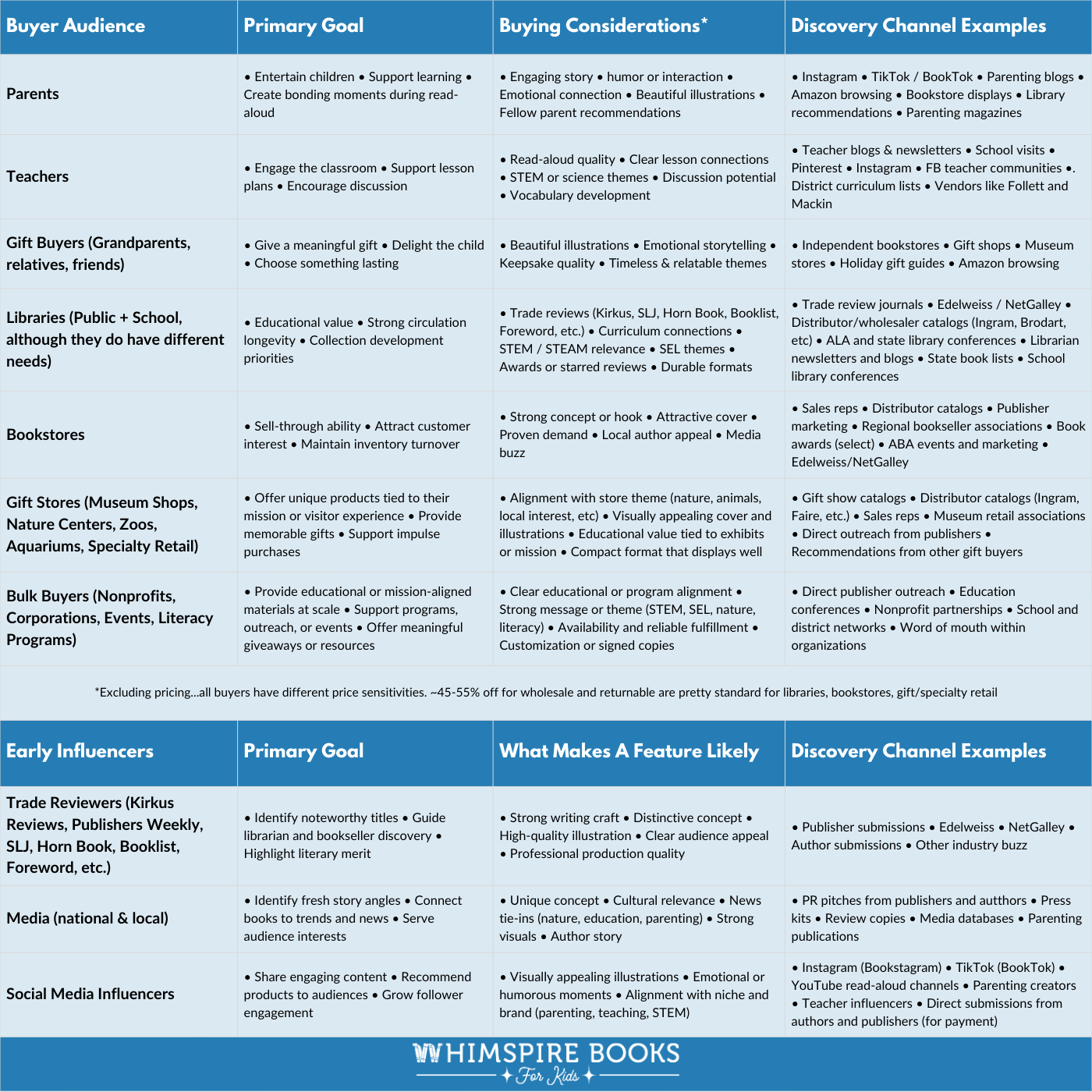
I recommend that all children’s book creators (whether a large publisher or a self-publisher) take a moment to map out how a story will connect to different buying audiences. Ideally, this exercise happens early in the book development process. I’ve created a simple matrix below to help you do this. You can apply it to your script or an early book concept.
This matrix includes who the general buyers and influencers are, their goals, what informs their decisions, and how they discover books. (This is not an exhaustive list, but should give a good overview.)
The matrix is split into two parts:
The first lists buyers and gatekeepers (who are also buyers, but not always the end readers). These are the groups who actually purchase books or help surface them to end readers. In children’s publishing, gatekeepers—such as librarians, teachers, and booksellers—play an especially important role in helping books reach kids.
The second part looks at early influencers. These groups shape early perceptions and awareness of books long before they are released. Buyers (the first section in the matrix) often look to these sources when deciding what books to purchase. Of course, many other early influences exist that aren’t listed here—friends, advertisements, Google searches, AI tools, and word of mouth, just to name a few.
Okay, ready? Take your script or concept and evaluate it. Once you’ve determined which audiences are most important to you, think through a short, tailored sales pitch for each group based on their unique goals and considerations. Even if you are still far from publishing your book, this kind of clarity can help you stay on track, or highlight areas of your script, blurb, or positioning that you may want to overhaul.